
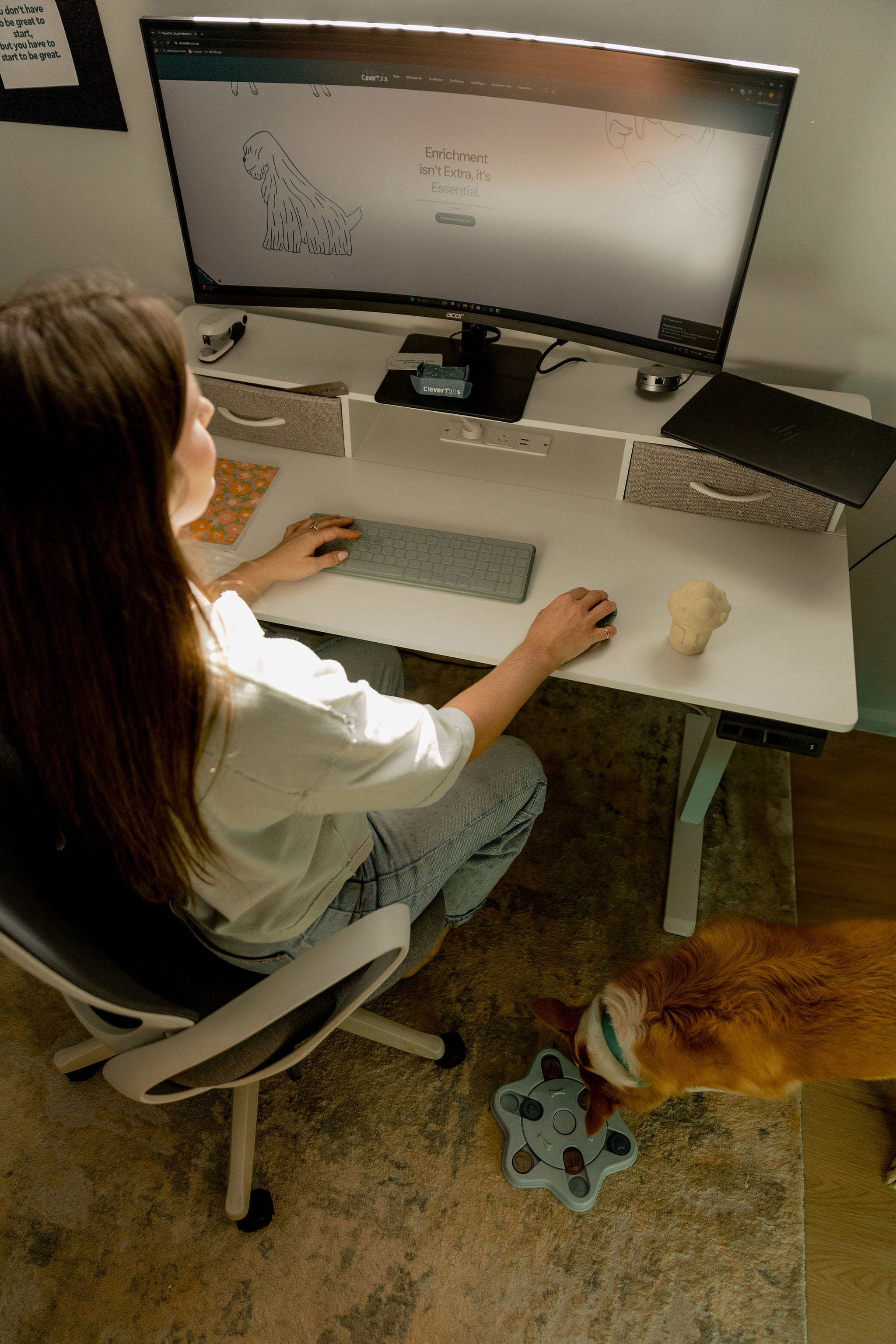
Working from home sounds like a dream for dog owners. Your dog gets to spend the whole day with you. No more guilt about leaving them for hours. Just you, your laptop, and your best mate snoozing at your feet.
Except… it doesn’t always work like that.
If you’re working from home with a dog, you’ve probably noticed that proximity isn’t the same as engagement. Your dog can see you all day, and still be bored out of their mind. They’ll nudge your arm mid-email, bark at nothing, pace the hallway, or find increasingly creative ways to destroy things.
The good news? A bit of structure and the right enrichment tools can make a huge difference, for your dog and your sanity.
Why work-from-home dogs still get bored
Dogs don’t just need physical presence, they need mental stimulation. Without it, their brain is essentially idle, and an idle dog will find their own entertainment (usually something you don’t want them to find).
When you’re at a desk, you’re not actually engaging with your dog. You’re a warm body in the room. And while that’s comforting for them, it doesn’t meet their need for mental challenge, novelty, and interaction.
Signs your WFH dog isn’t getting enough mental stimulation:
• Restlessness or pacing during your work hours
• Pawing at you, nudging, or interrupting constantly
• Barking or whining for no apparent reason
• Destructive behaviour (chewing, digging, scratching)
• Appearing lethargic or sleeping excessively, then being hyperactive in the evening
• Getting into things they usually ignore
Building a WFH routine that works for both of you
The key is structure. Dogs are creatures of habit, and a predictable routine reduces anxiety, curbs attention-seeking behaviour, and actually makes your dog easier to manage during the day.
A simple daily framework:
Morning: tire them out before you start work
Even 20–30 minutes of solid exercise before you open your laptop can dramatically change your dog’s behaviour for the rest of the morning. A walk, a backyard game, or some active play uses up physical energy and takes the edge off.
Mid-morning: enrichment block #1
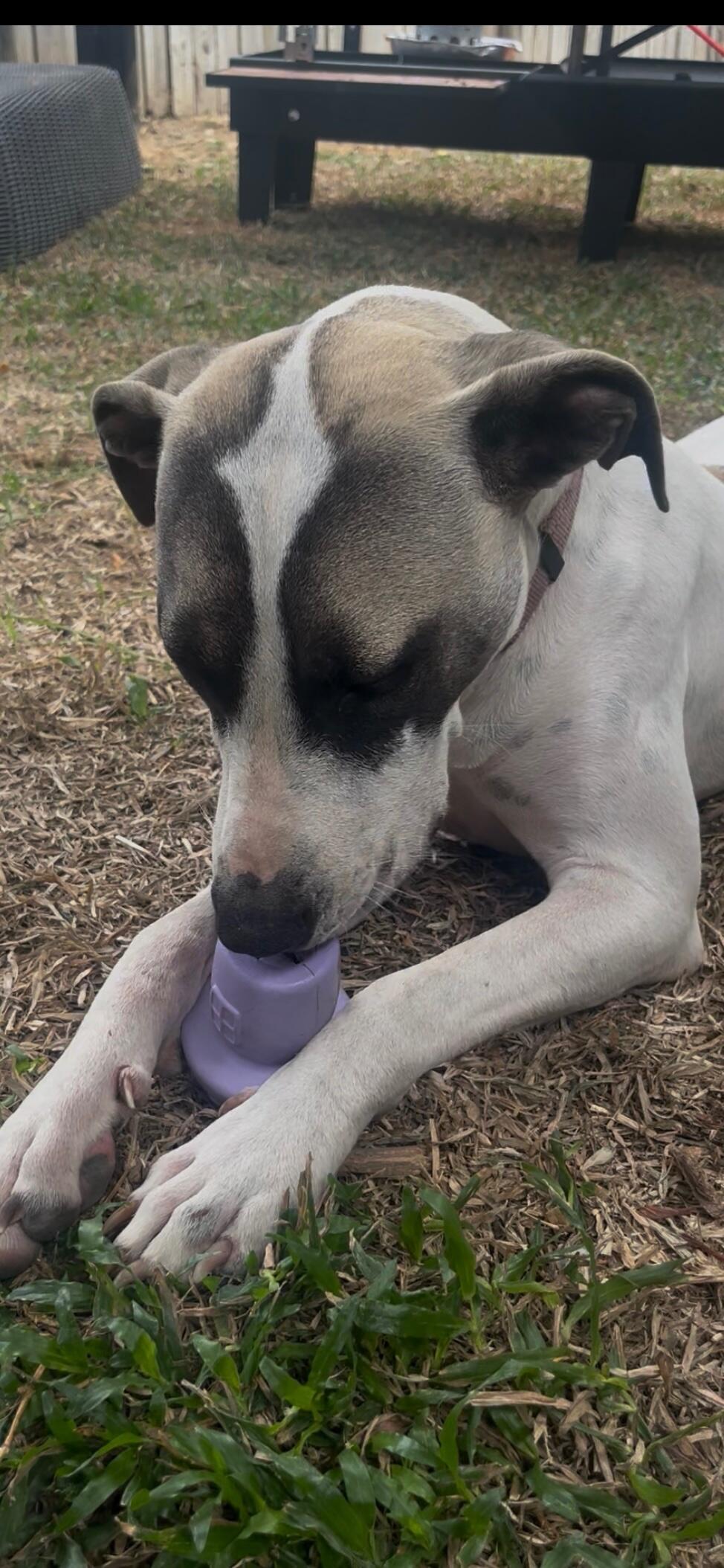
This is where enrichment toys earn their keep. A well-designed puzzle toy or interactive feeder can keep a dog occupied.
The trick is to get the right level. Too easy and the dog gets through it fast. Too hard and they get frustrated. Start easy and work your way up.
Lunch: connection time
Use your lunch break for a short walk or a five-minute training session. Training can be mentally tiring, even a handful of simple commands like sit, drop, and stay works their brain hard. It also builds the bond between you, which tends to make dogs calmer and more settled for the afternoon.
Early afternoon: enrichment block #2
Rotate your toys so they feel fresh. Dogs habituate quickly, the same toy they were obsessed with yesterday can feel boring today. Keeping a small rotation and introducing toys one at a time maintains novelty and engagement.
Late afternoon: wind-down and settle
As you approach the end of your workday, signal to your dog that it’s wind-down time. A long chew, a snuffle mat, or a stuffed toy gives them something to focus on quietly while you wrap up. This is also a good time to let them decompress on their own.
What to look for in a WFH enrichment toy
Not all enrichment toys are created equal. When you’re relying on a toy to keep your dog occupied during a meeting or a focused work sprint, it needs to deliver. Here’s what actually matters:
• Appropriate difficulty. Too easy and they’ll be done in seconds. Too hard and they’ll give up and come bother you. The sweet spot is a challenge they can solve with effort, one that rewards persistence.
• Durable construction. WFH enrichment happens unsupervised. You need a toy that can withstand enthusiastic chewing and won’t fall apart while you’re in a Teams call. Flimsy toys are a safety risk and an expensive habit.
• Easy to clean. You’re using these toys daily with food inside. If they’re a pain to clean, you won’t use them consistently. Dishwasher-safe or easy-rinse designs save time and maintain hygiene.
• Versatility. The best enrichment toys work with multiple food types: kibble, wet food, treats, pastes. This lets you adjust the difficulty and keep things interesting for your dog.
The bottom line
Working from home doesn’t automatically mean a happy, well-behaved dog. But with a bit of structure and the right enrichment tools in your corner, it absolutely can.
The goal isn’t to entertain your dog every minute of the day, it’s to give them enough mental stimulation that they’re genuinely content to settle while you work. A tired, enriched dog is a calm dog. And a calm dog makes for a much more productive workday.
At CleverTails, we design enrichment toys specifically for this kind of sustained, independent engagement, because we know that what you really need is something that works without you having to babysit it. Explore our range and find the right fit for your dog.